





Why Peggy Guggenheim Is Still a Collector’s Inspiration May 28, 2026
The larger-than-life gallery founder combined razor-sharp instinct and a passion for the new, writes Florence Hallett
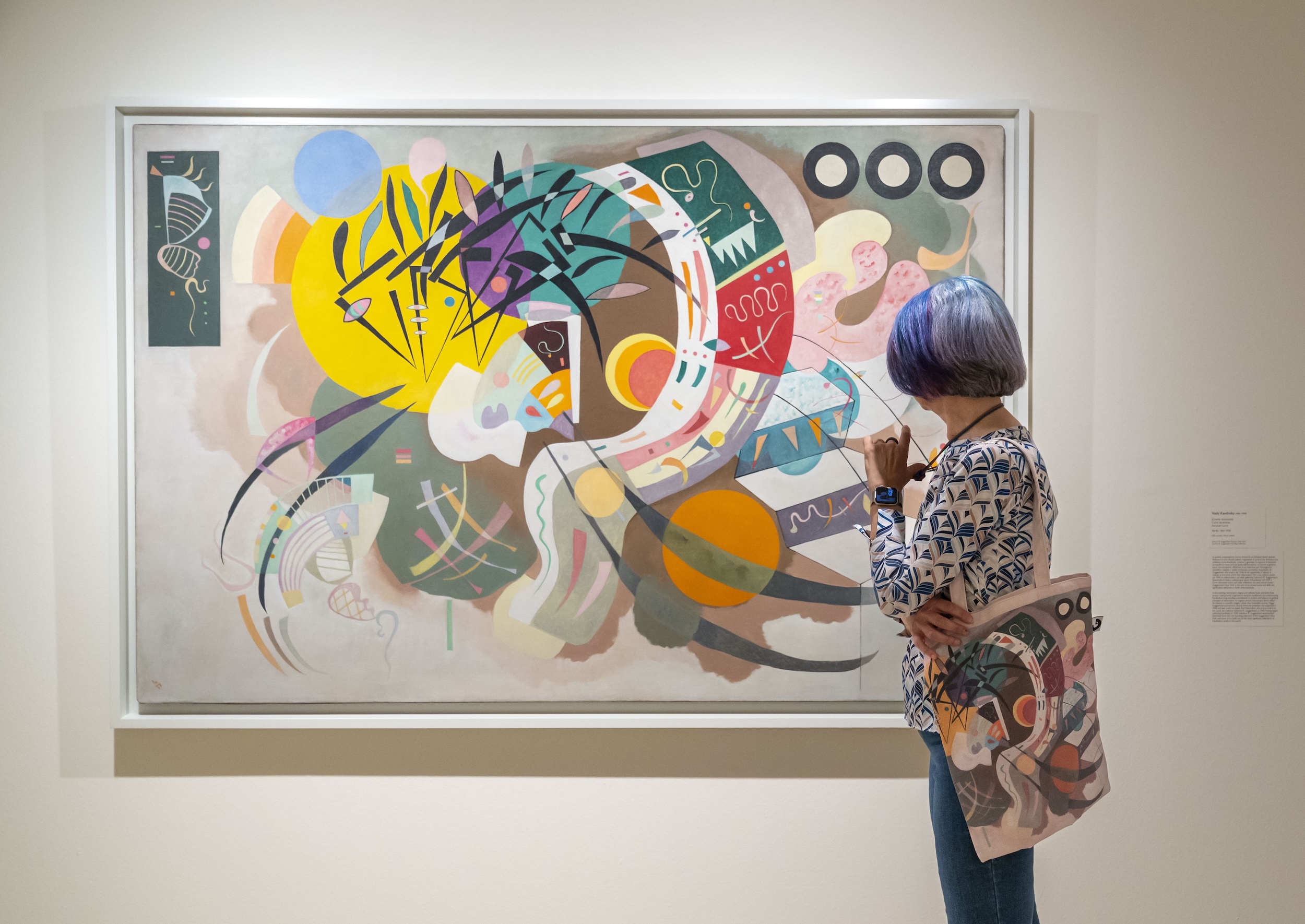
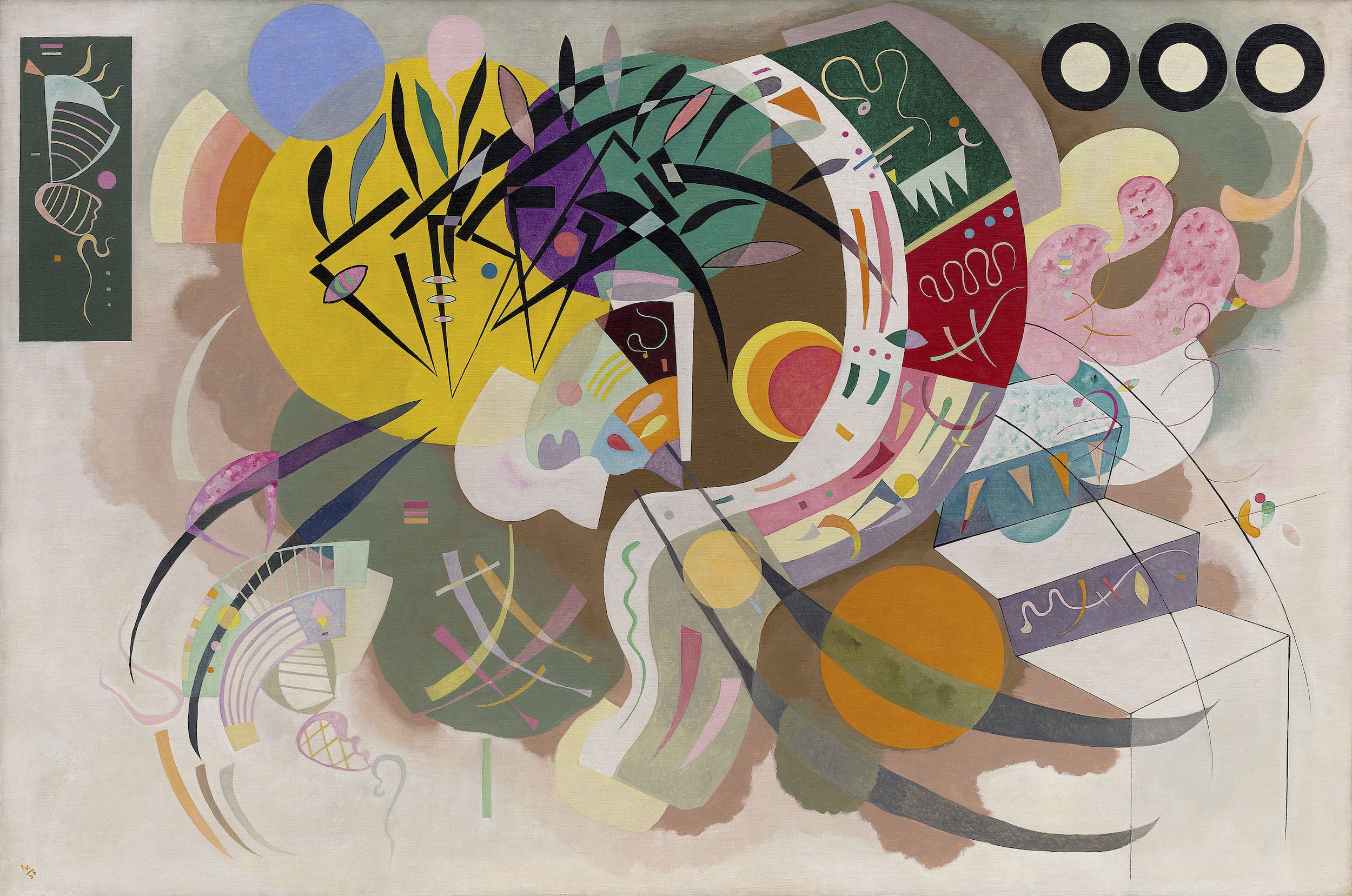
Vasily Kandinsky’s painting “Dominant Curve (Courbe dominante)” (1936) in “Peggy Guggenheim in London: The Making of a Collector.” Photograph: © Peggy Guggenheim Collection / Matteo De Fina
“Little did I dream of the thousands of dollars I was about to sink into art,” wrote Peggy Guggenheim in 1946, reflecting on her first forays into collecting.
Today, the American-born heiress and socialite (1898-1979) is celebrated as an art-world powerhouse whose pursuit of contemporary talent took her from New York, via Paris and London, to Venice, where her landmark collection is installed in the palazzo on the Grand Canal that was her home for the last 30 years of her life.
But Guggenheim’s collecting journey began on a more modest scale. Her earliest acquisitions were bought for Yew Tree Cottage, the historic timber-framed home deep in the English countryside on the Hampshire-Sussex borders where she lived between 1934 and 1939.
These formative years culminated in the opening of her first gallery, Guggenheim Jeune, in London’s Mayfair in 1938, a spark plug for the rather staid British art scene of the time. The bold but short-lived venture is now the focus of a new exhibition at the Peggy Guggenheim Collection, Venice, which will travel to London’s Royal Academy of Arts this fall and on to the Guggenheim New York in 2027.
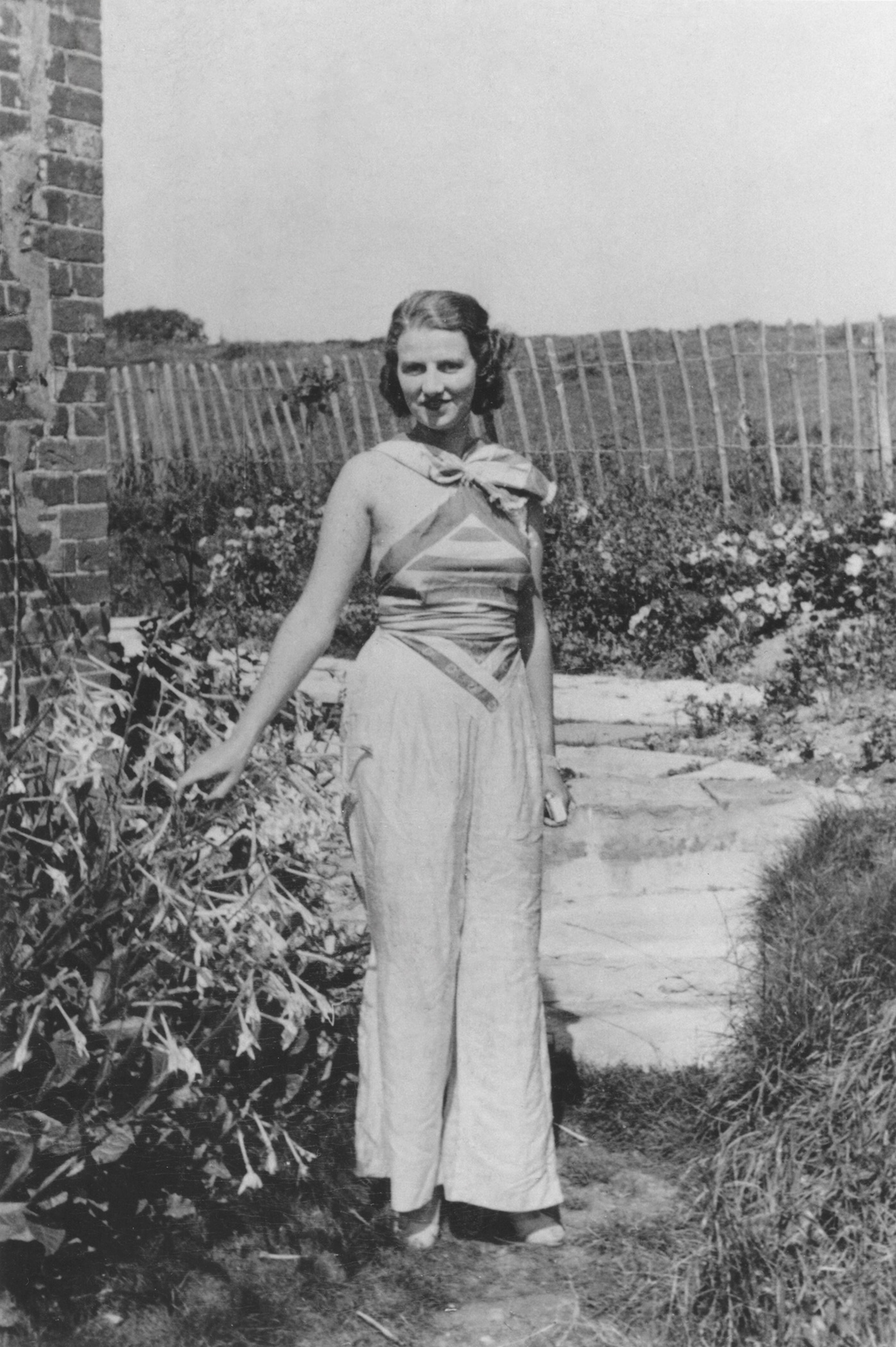
Peggy Guggenheim at Hayford Hall, Devon, England in 1934. Photograph: Private collection
For today’s art collector, new or established, Guggenheim offers not only joyous inspiration, but clear-sighted wisdom as valid now as it was almost a century ago. But the self-proclaimed “art addict” might never have been: heartbroken after a series of personal traumas, Guggenheim first turned to collecting as a distraction.
It was a friend, the French artist Marcel Duchamp, who introduced her to the art world. The pair met n the 1920s in Paris, where a young Guggenheim had moved to embrace a more bohemian existence than her life in New York. “At that time, I couldn’t distinguish one thing in art from another,” she wrote. “Marcel tried to educate me. I don’t know what I would have done without him.”
Guggenheim’s willingness to take advice was among her key strengths as a collector, but it was matched by a supreme confidence in her own judgment, says Gražina Subelytė, co-curator of the current Venice show, “Peggy Guggenheim in London: The Making of a Collector.”
“She valued originality and experimentation above fashion or convention,” says Subelytė. “She also surrounded herself with a remarkable circle of advisors, including Duchamp, Mary Reynolds, Herbert Read, Nelly van Doesburg, Samuel Beckett and others, reflecting her wisdom and openness to different perspectives and her willingness to trust informed judgment while still following her own instinct.”
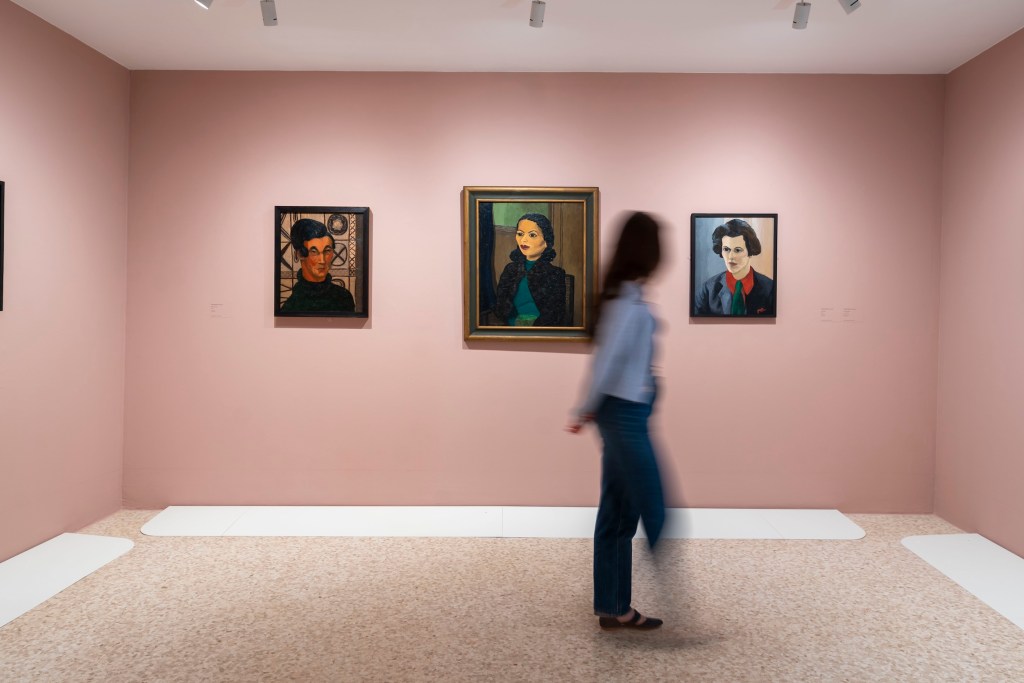
“Peggy Guggenheim in London: The Making of a Collector.”. Photograph: © Peggy Guggenheim Collection / Matteo De Fina
The force of this personal response to art is recorded in her autobiography, where she describes her encounter with the Jean Arp sculpture “Head and Shell” (circa 1933) that would be her first personal acquisition. “I fell so in love with it that I asked to have it in my hands. The instant I felt it I wanted to own it,” she recalls.
Guggenheim—her name synonymous with the boundless wealth of a family who originally made their money in mining—once pledged to “buy a picture a day.” But her resources were not unlimited. “She was not among the wealthiest members of the Guggenheim family, and her collecting was often shaped by careful choices, instinct and timing rather than unlimited means,” explains Subelytė.
“During the London and Hampshire years, as World War II approached, uncertainty and limited space inevitably impacted her choices,” Subelytė says. “Guggenheim’s interest in smaller, portable works—such as the [Arp sculpture] or Henry Moore’s ‘Reclining Figure’ (1938)—reflected not only practical realities, but also her instinct for recognizing artists of lasting significance before they were widely celebrated.”
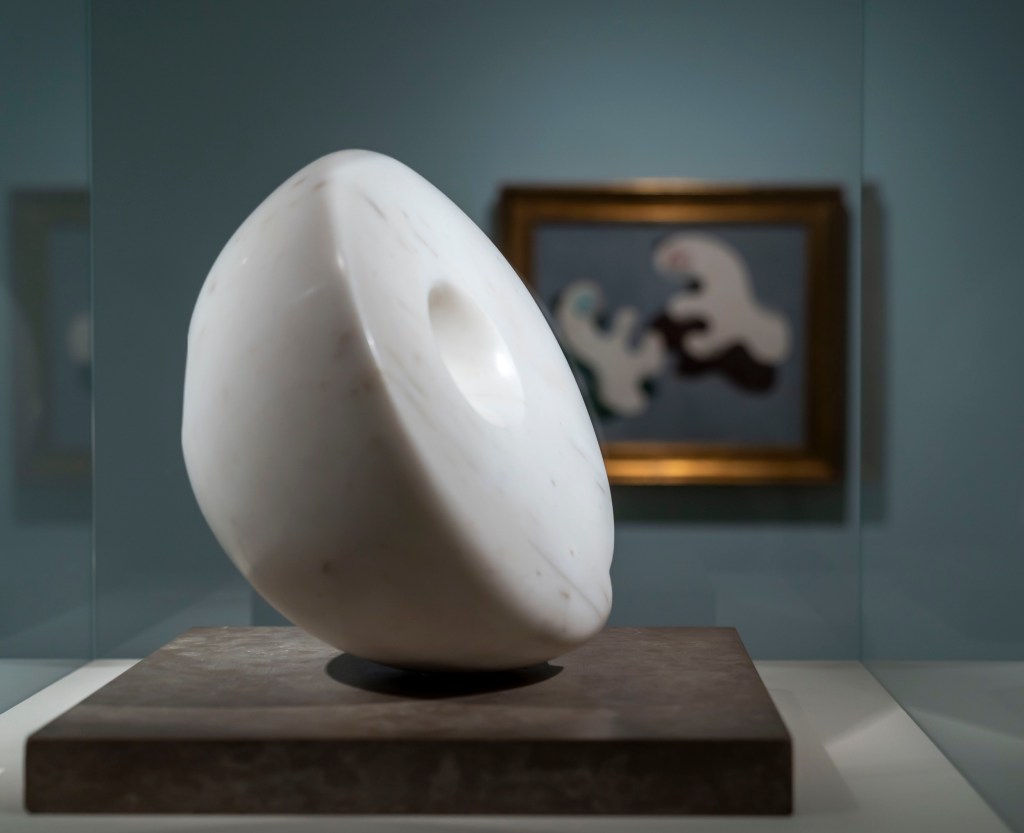
“Peggy Guggenheim in London: The Making of a Collector.” Photograph: © Peggy Guggenheim Collection / Matteo De Fina
In fact, Guggenheim claimed a degree of credit for encouraging Moore’s small-scale productions, having written to explain that she admired his work and “how sorry I was that I had no room in my house for any of it.” True or not, it reflects both the value she placed on her relationships with artists, whose studios she regularly visited, and her growing influence, which was extended with the opening of Guggenheim Jeune.
“While it lasted less than two years—and lost money—the gallery shook up fuddy-duddy London art institutions,” says Georgina Adam, art market editor-at-large at The Art Newspaper. It also introduced surrealist and abstract works—particularly those of Russian artist Vasily Kandinsky—to the British public, Adam notes. Guggenheim gave Kandinsky his first London exhibition, from which her sister Hazel bought his “Cossacks” (1910-11), presenting it to the Tate Gallery in 1938.
“As well as taking the time to get to know artists and their work, [Peggy] was often very supportive of their careers,” says Simon Grant, the Venice exhibition’s co-curator. A notable example: the financial help she gave to the German artist Otto Freundlich when he was being persecuted by the Nazis.
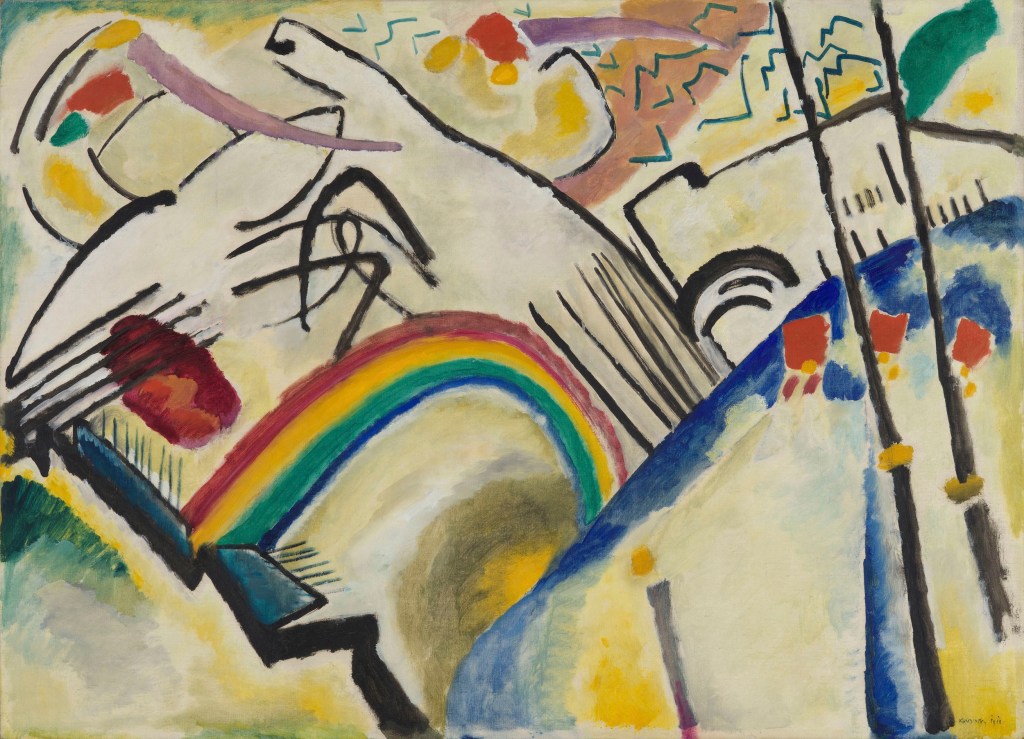
Vasily Kandinsky’s “Cossacks (Cosaques)” (1910–11). Photograph: Tate, London, Presented by Mrs Hazel McKinley, 1938
In addition, Grant says, “she played an important and little-known role as an art patron by donating numerous artworks by both British and international artists to several regional galleries at a time when such action was rare.” Her knack for spotting talent extended to a 15-year-old Lucian Freud whose work was shown at Guggenheim Jeune and to plans—never realized—for Frida Kahlo’s debut UK show at a time when the Mexican artist was known principally as Diego Rivera’s wife.
Trusting your own tastes, immersing yourself in contemporary culture, and seeking out talented, emerging artists whose work is still relatively affordable all remain astute tactics for collecting today—best approached the Peggy Guggenheim way, through a genuine love of art and the individuals who make it.
Visiting Venice? Explore the city’s historic palazzi, reimagined for modern living
“Peggy Guggenheim in London: The Making of a Collector” is at Peggy Guggenheim Collection, Venice, until October 19, 2026; then Royal Academy of Arts, London, November 21, 2026–March 14, 2027; and Guggenheim New York, April 16–September 12, 2027
