





What Art Collectors Really Look for in a Home November 18, 2026

Art demands huge walls, high ceilings and a home that both showcases and protects it, writes Fiona McKenzie Johnston
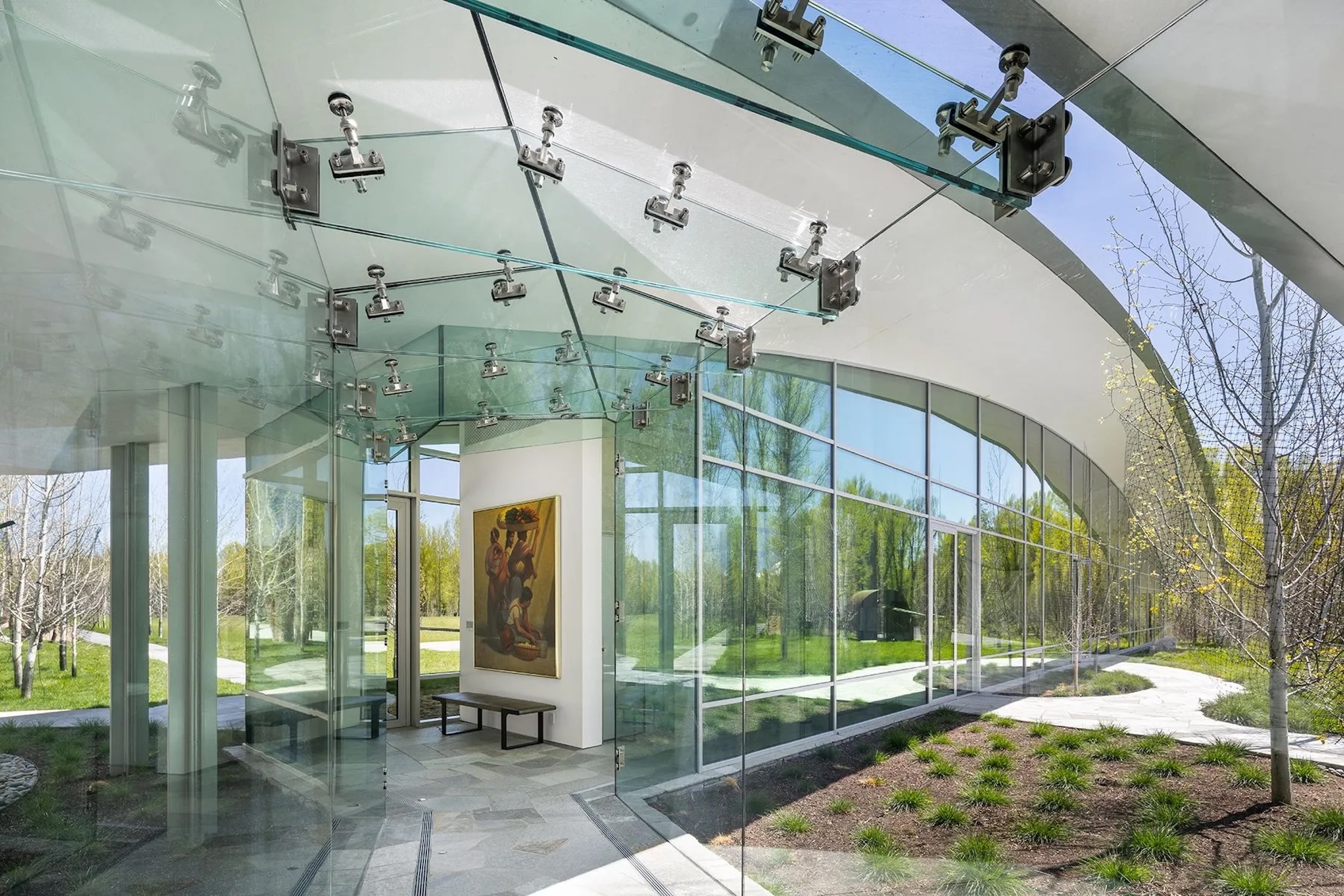
Wilson, Wyoming | Jackson Hole Sotheby’s International Realty
As the world’s top gallerists, curators, collectors and enthusiasts convene at the 2026 edition of Art Basel Miami Beach, all eyes will be on works sold and—beyond the booths—where those works end up. “For me, art has to live, has to be shared,” says Hong Kong-based Swiss collector Monique Burger in a report on the Art Basel and UBS Survey of Global Collecting 2026. If art needs a home, so do collectors.
Contemporary galleries always welcome buyers looking to display works, rather than simply store them. Collectors, in any case, want to enjoy the art they’ve bought, while also protecting it—and this continues to shape high-end residential property.
Stephanie Moss Dandridge, global real estate advisor for ONE Sotheby’s International Realty, is based in Melbourne Beach, a three-hour drive up the Florida coast from Miami, but works with clients around the world. While Dandridge notes that the collectors she serves are interested in the full spectrum of property types, from oceanfront and ranch estates to city-center penthouses, apartments and townhouses, certain specifics are in common demand, she says.
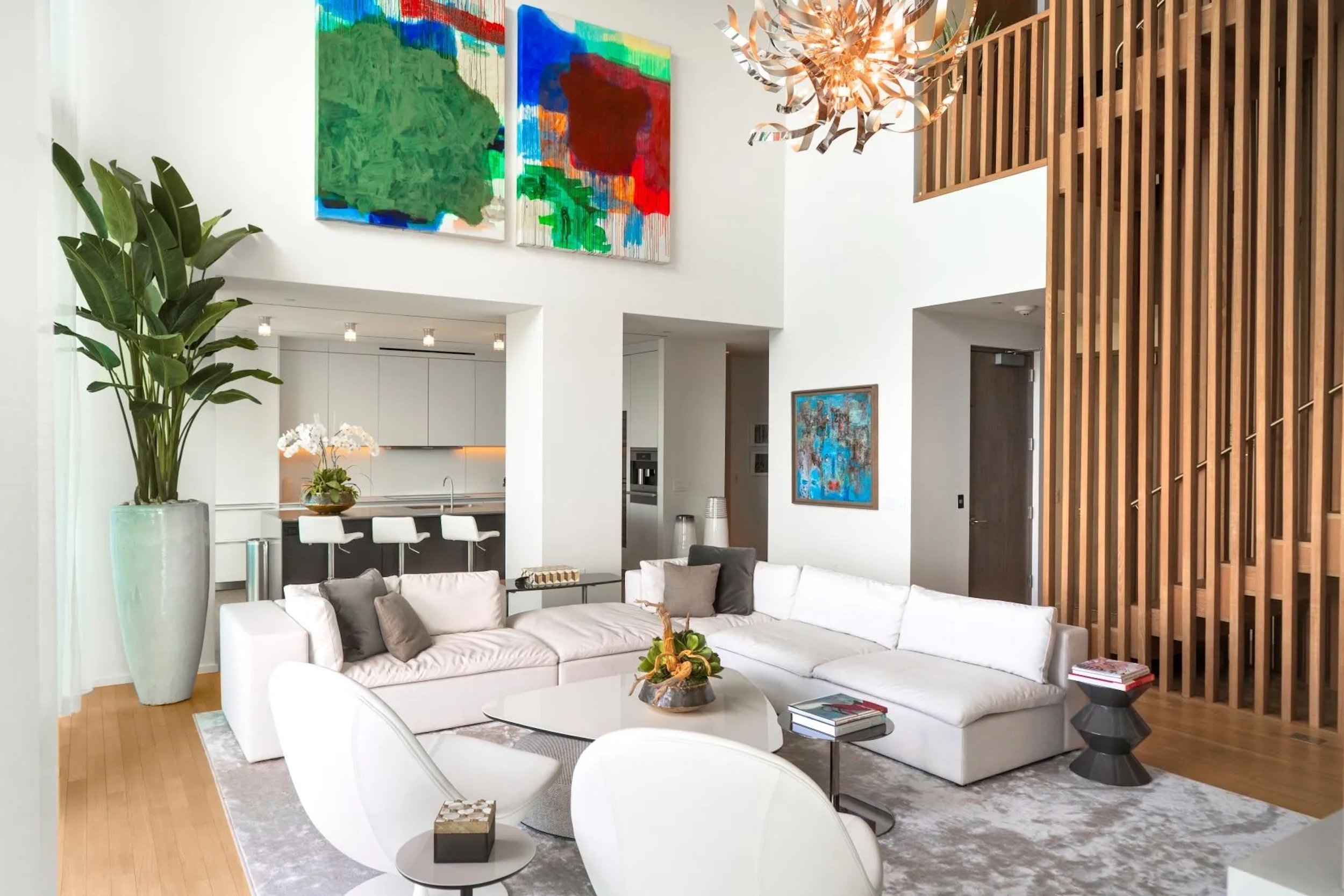
Miami Beach, Florida | ONE Sotheby’s International Realty
These often stem from the art itself. In recent decades, contemporary art has soared in scale, as the work of the modern masters did before it. “I have a client who collects Andy Warhol,” says Dandridge. “There are series like “Campbell’s Soup Cans” that need to be hung together. You need huge walls and high ceilings.”
Francis Sultana, the London-based AD100-recognised interior designer who is considered a go-to for many serious collectors, observes that appropriate property proportions are generally easier to come by in the U.S. than in Europe. Sultana, who is also the artistic director and CEO of David Gill Gallery, which sells collectible art and design, links this to why “galleries take larger works to U.S. fairs.”
European real estate has its exceptions, of course. Sultana owns a “double set” of apartments in Albany, a storied 18th-century mansion block in London’s Mayfair, where his ceilings rise to 17 feet. The 19th-century étage noble apartments of Haussmannian Paris offer comparable loft, as do the piano nobili of Venice’s exquisite Grand Canal palazzi. Meanwhile, rural Europe is strewn with castles, chateaux and schlösser with even greater scope and often covetable provenance.
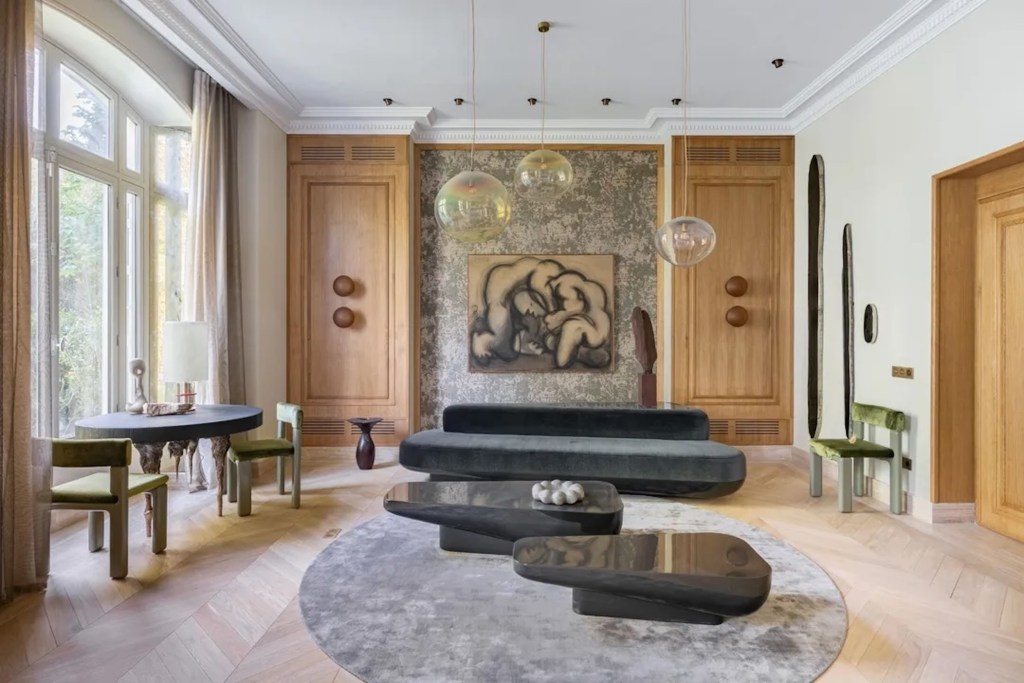
Paris, France | Propriétés Parisiennes Sotheby’s International Realty
In 2025, the French billionaire entrepreneur Xavier Niel, who collects contemporary and street art, acquired the Pavillon de Musique de la Comtesse du Barry near Versailles. This “mini palace” was first conceived as a folly for entertaining by Louis XV’s mistress in the 18th century, when every room contained a curated display of contemporary (for then) French art and craftsmanship.
Older buildings have their design benefits, according to Sultana. “Period architectural detail humanizes the rooms,” he says. “Without this, clever lighting is vital to prevent spaces feeling commercial. A home needs to be a home, not a museum.” Historic homes can also have structural advantages. Often they’re more “solid,” he says.
Whatever the period of a property, reinforcing walls and floors has become standard practice for collectors who aspire to scale—or heft. Works by artists such as Anselm Kiefer, incorporating concrete and lead, might weigh several tons. “Collectors want flexibility when it comes to repositioning art within their homes,” notes Sultana.

Berkshire County, Massachusetts | William Pitt Sotheby’s International Realty
Another key condition for walls, details Dandridge, is their aspect. “Florida especially is very sunny, and a west-facing wall is out. The strength of the sun would destroy the art,” she says. This is a concern even in more temperate climes. Irish-born artist Michael Craig-Martin’s primary residence is a north-facing flat in one of London’s landmark Barbican towers. While the view from the other side of the development is most sought after, he explains, “you couldn’t possibly hang pictures” there.
Climate control has become routine and is essential in coastal properties. “Humidity is not good for art,” remarks Dandridge. The salt air of a seaside location may also affect the type of sculpture—in material terms—that can be placed in a garden or grounds of a home. Right across the globe, clients have also become “attuned to even the most minimal flood risks,” she says. Some collectors are taking the precaution of installing museum-grade glass windows across their properties.
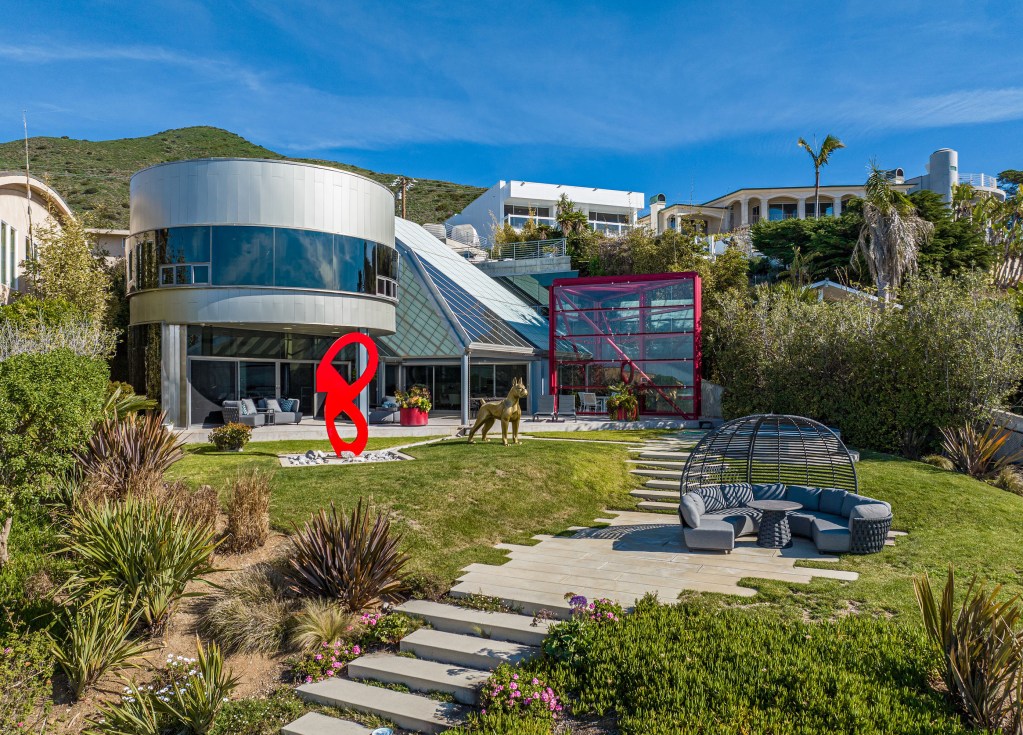
Malibu, California | Sotheby’s International Realty – Beverly Hills Brokerage
Meticulous security is a must, depending on location. Fine art insurers favor city apartment blocks that come with door staff and high-spec CCTV; houses on streets with privately funded security patrols; and gated and guarded residential enclaves.
This becomes more layered in the case of standalone houses, ranches, compounds and estates. Alarm systems have become exceptionally sophisticated, but in certain locations, including the south of France and areas of the U.S., says Dandridge, “there’ll also need to be a gatehouse that doubles as a security office.”
Strikingly, these are not the only add-ons collectors are seeking. Dandridge has noticed a growing trend in the U.S. for commissioning modern follies. Art collecting tends to snowball, and these new builds extend the square footage of available display space, serving a near identical purpose to Madame du Barry’s pavilion.
It doesn’t stop there. In pursuit of yet more walls, Sultana reports that some clients are “buying properties in places they visit regularly, even if ‘regularly’ is only once or twice a year. It can be more economical than paying for art storage and a hotel, and there are aesthetic benefits—specifically, you’re able to spend time with your art.”
Tally up those residences, and a portfolio can easily reach double digits; a collection, in its own right, of real estate.
Art Basel Miami Beach 2026 runs from Dec 4-6. Sotheby’s International Realty returns as an official Show Partner for the fourth consecutive year
Explore our Collecting Focus series, featuring expert advice on contemporary art, high jewelry, watches, wine, rare whisky, historic books, fashion history, natural history, Chinese art and antiques and Americana
